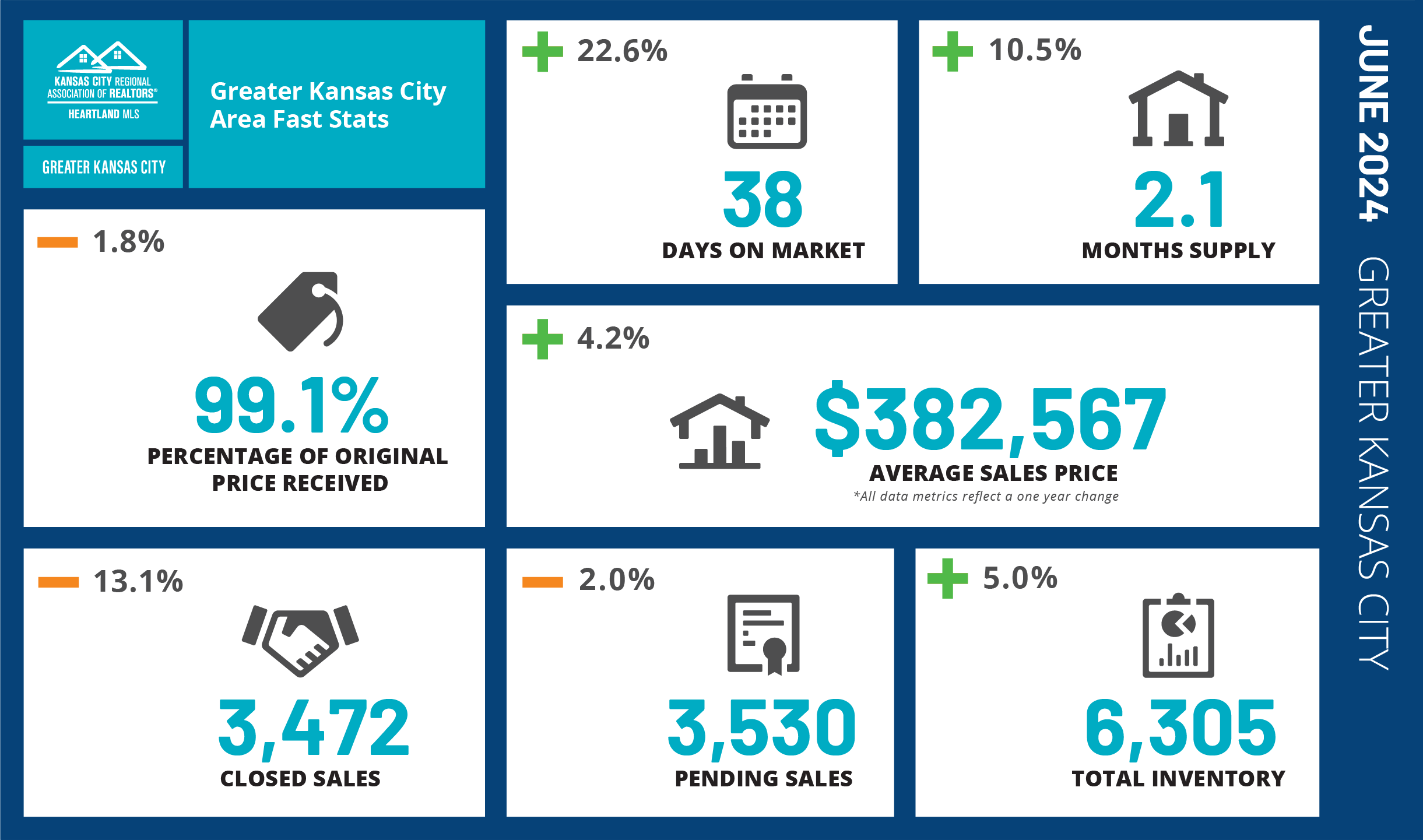
Market Highlights Kansas City Metro Area June 24′ vs June 23′
Home sales are ↘️ 13.1% to 3,472 closed sales.
Home prices are ↗️ 4.2% to $382,567 average sales price.
Home inventory ↗️ 5.0% to 6,305 total homes available.
Home monthly supplies are ↗️ 10.5% to 2.1 months supply.
Average days on market are ↗️ 22.6% at 38 days on market.
Percent of original list price ↘️ 1.8% to 99.1% of price received.
Pending sales are ↘️ 2.0% to 3,530 for the month.
If you have more questions about this information, feel free to reach out for more information.
Have a great day, Gregory Weis
913-579-4106 Cell
913-631-2900 Office gweis@cbregan.com
Oh, by the way®… if you know of someone who would appreciate the level of service I provide, please call me with their name and contact information. I’ll be happy to follow up and take great care of them.
In life, patience is a virtue – but in the world of homebuying, waiting too long in hopes of finding the perfect home actually isn’t wise. That’s because the pursuit of perfection comes at a cost. And in this case, that cost may be delaying your dream of homeownership. As Bankrate explains:
“One of the most common first-time homebuyer mistakes is looking for a home that checks each of your boxes. Looking for perfection can narrow your choices and lead you to pass over good, suitable options for starter homes in the hopes that something better will come along.”
The Cost of Holding Out for Perfection
Nothing in life is ever perfect – and that’s true when you search for a home too. Unless you’re building a brand-new home from the ground up, chances are there are going to be some features or finishes you wouldn’t have picked yourself. It may be as simple as paint colors, a light fixture, or the tile in the bathrooms or kitchen. Or even that the backyard isn’t fenced in. It could also be that the home itself is great, but it’s not the ideal location you were hoping for.
But here’s the trade-off you’d be making without even realizing it. In all that time you’d spend searching for the perfect place, you’d overlook a lot of homes that would’ve worked for you. U.S. News explains:
“. . . you may miss opportunities if you enter the process with blinders on and aren’t open-minded . . . Countless potential buyers never buy because of this, and thus miss great investments or never move on to the next chapter of their lives.”
It’s Time To Redefine Perfection
Especially with affordability and inventory where they are today, buying a home that needs some updates, is a few neighborhoods away from your ideal location, or doesn’t have all your desired features can be a smart move. Here’s why.
For starters, these homes are usually more affordable, which is important at a time when some buyers are struggling to find options in their budget.
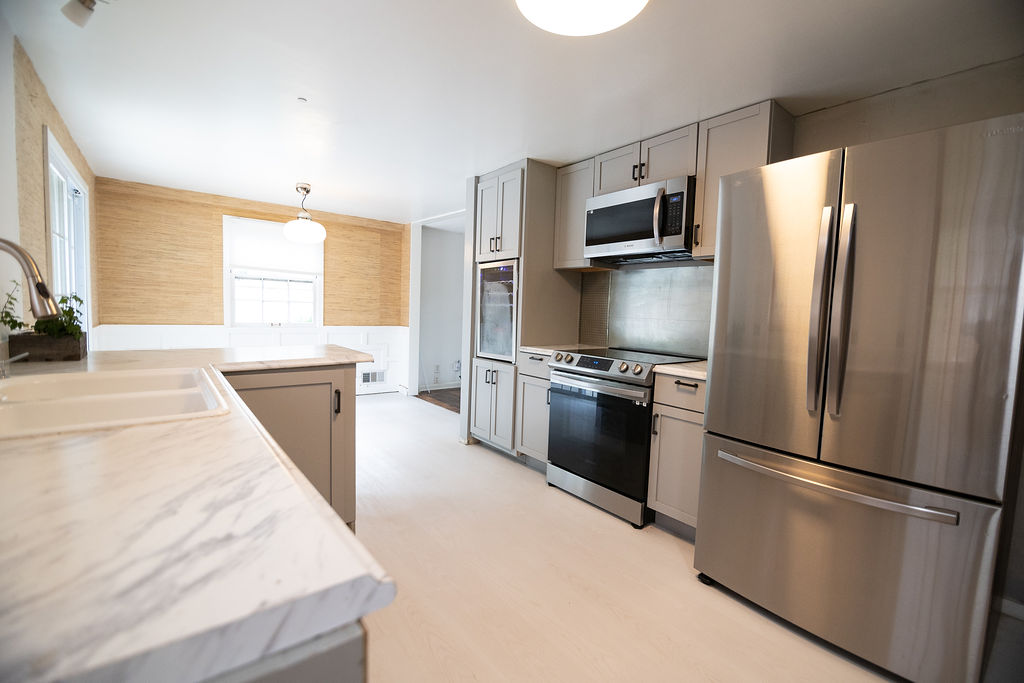
And they give you a chance to make the space your own or discover a whole new area of town. You may find out you actually love that neighborhood. Or, swapping out a feature here or there after move-in isn’t such a big deal. So, look past the green shag carpet and see the bones of the house. With a little vision and creativity, you can turn a good house into a fantastic home.
How an Agent Helps You Explore Your Options
If you’re open to a home that needs a little elbow grease or is a bit further out, let your agent know. They’ll be happy to show you how this can really open up your pool of homes to pick from. They’ll also help coach you through this process by:
1. Prioritizing Your Must-Haves: Your agent will want to revisit your wish list and separate your non-negotiables from your nice-to-haves. From there, they’ll focus on what’s really most important to you as they come up with a bigger list of options for you to choose from.
2. Coaching You To See the Potential: As you tour these added options, your agent will help you look beyond cosmetic flaws and imagine what the home could be with a little work. Simple updates like a fresh coat of paint or new flooring can make a big difference.
3. Connecting You with Local Pros: And an agent’s support goes one step further. If they know what you’re hoping to change after you move in, they can connect you with local pros who can get the job done. That way it’s less work for you, and you don’t have to worry about tracking down contractors.
Bottom Line
Remember, there is no perfect home. But with expert help and an open mind, an agent can find you the right home – even in today’s market. Connect with a local real estate agent to see what’s out there.
This post was first published on Keeping Current Matters.
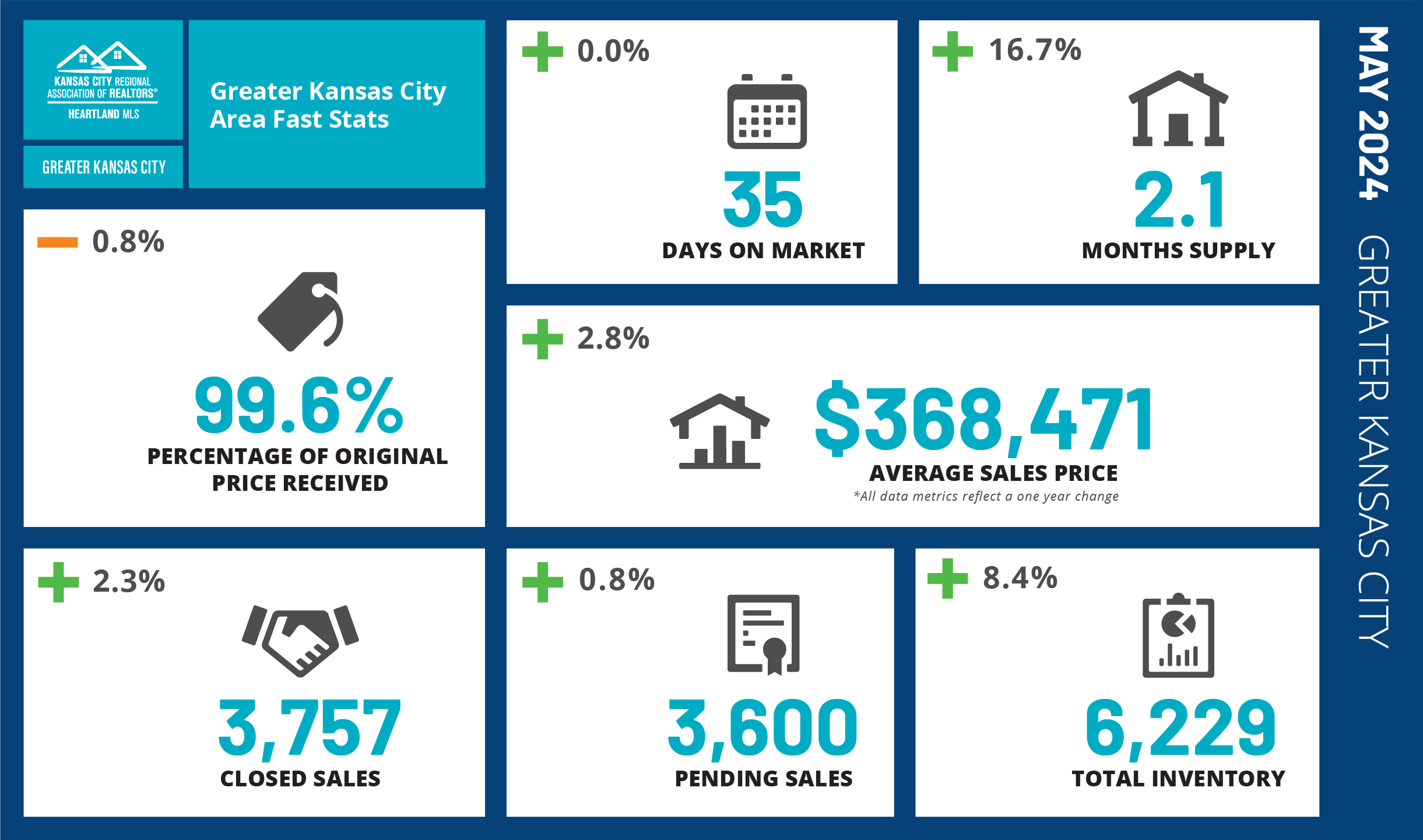
Market Highlights Kansas City Metro Area May 24′ vs May 23′
Home sales are ↗️ 2.3% to 3,757 closed sales.
Home prices are ↗️ 2.8% to $368,471 average sales price.
Home inventory ↗️ 8.4% to 6,229 total homes available.
Home monthly supplies are ↗️ 16.7% to 2.1 months supply.
Average days on market are ➡️ 0.0% at 35 days on market.
Percent of original list price ↘️ 0.8% to 99.6% of price received.
If you have more questions about this information, feel free to reach out for more information.
Have a great day, Gregory Weis
913-579-4106 Cell
913-631-2900 Office gweis@cbregan.com
Oh, by the way®… if you know of someone who would appreciate the level of service I provide, please call me with their name and contact information. I’ll be happy to follow up and take great care of them.
The 2024 Presidential election is just months away. As someone who’s thinking about potentially buying or selling a home, you’re probably curious about what effect, if any, elections have on the housing market.
It’s a great question because buying or selling a home is a major decision, and it’s natural to wonder how such a major event might impact your plans.
Historically, Presidential elections have only had a small, temporary impact on the housing market. Here’s the latest on exactly what’s happened to home sales, prices, and mortgage ratesthroughout those time periods.
Home Sales
During the month of November, in years when the Presidential election takes place, there’s typically a slight slowdown in home sales. As Ali Wolf, Chief Economist at Zonda, explains:
“Usually, home sales are unchanged compared to a non-election year with the exception being November. In an election year, November is slower than normal.”
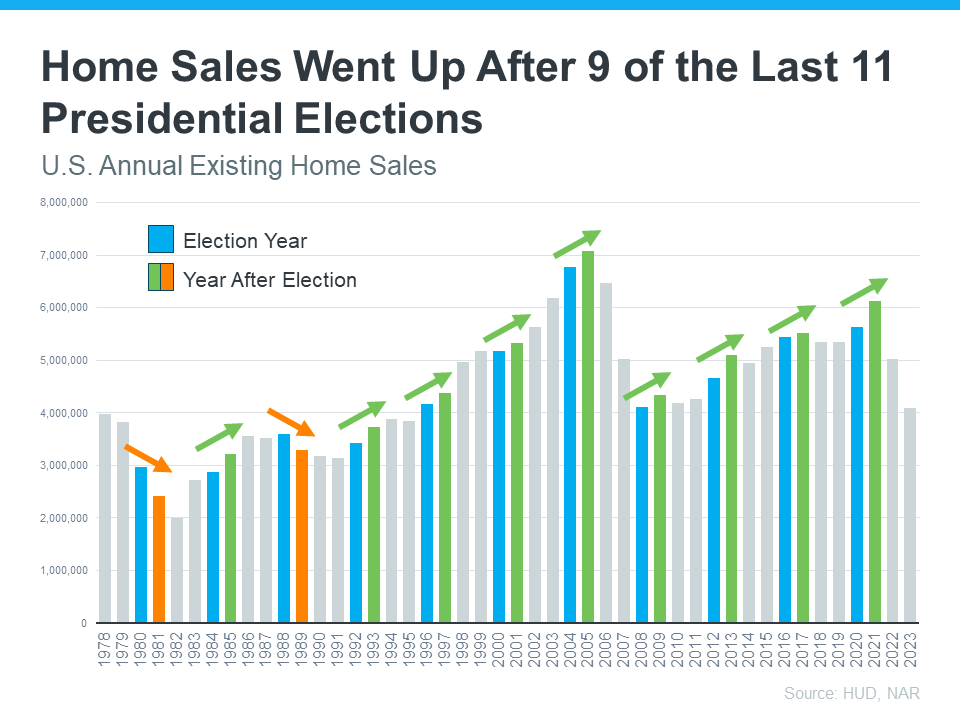
This is mostly because some people feel uncertain and hesitant about making big decisions during such a pivotal time. However, it’s important to know this slowdown is temporary.Historically, home sales bounce back in December and continue to rise the following year.
The graph shows annual home sales going back to 1978. Each year with a Presidential election is noted in blue. The year immediately after each election is green if existing home sales rose that year. The two orange bars represent the only years when home sales decreased after an election.
Home Prices
What about home prices? Do they drop during election years? Not typically. As residential appraiser and housing analyst Ryan Lundquist puts it:
“An election year doesn’t alter the price trend that is already happening in the market.”
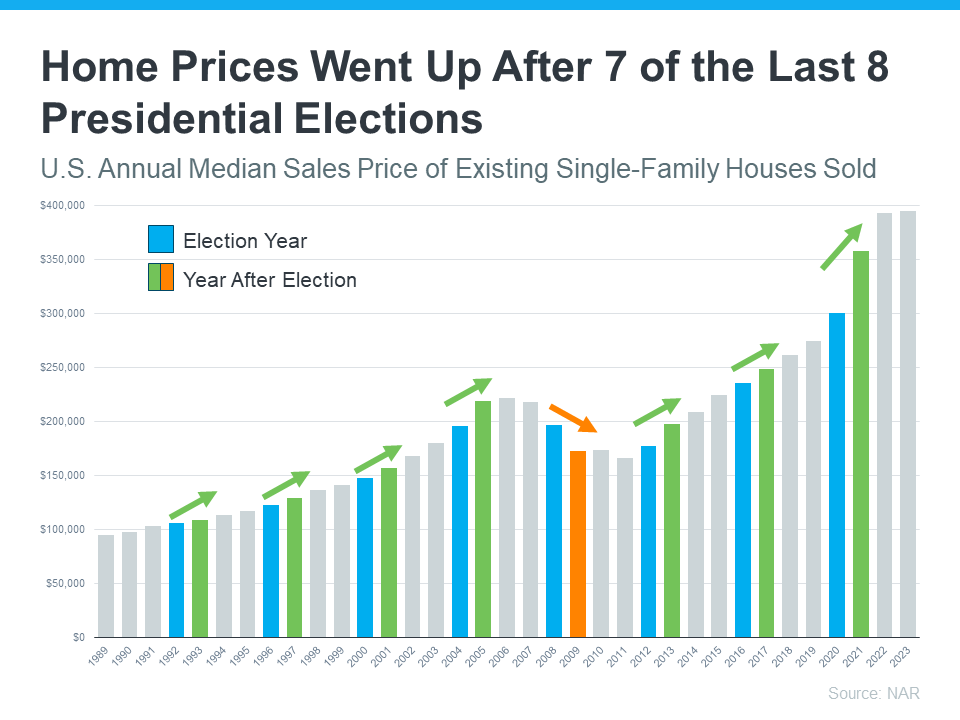
Home prices are pretty resilient. They generally rise year-over-year, regardless of elections. The latest data from NAR shows after seven of the last eight Presidential elections, home prices increased the following year (see graph below):
Just like the previous graph, this shows election years in blue. The only year when prices declined after an election is in orange. That was during the housing market crash, which was far from a typical year. Today’smarketis different than it was back then.
All the green bars represent when prices rose the following year. So, if you’re worried about your home losing value because of an election, you can rest easy knowing prices rise after most Presidential elections.
Mortgage Rates
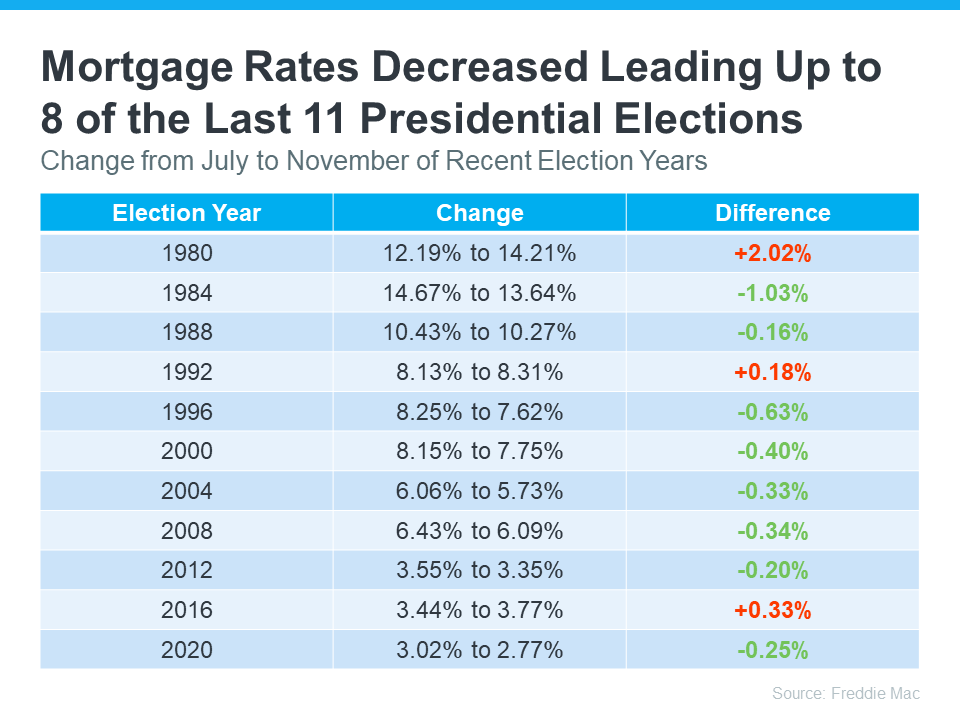
Mortgage ratesare important because they affect how much your monthly payment will be when you buy a home. Looking at the last 11 Presidential election years, data from Freddie Mac shows mortgage rates decreased from July to November in eight of them (see chart below):
Most forecasts expect mortgage rates to ease slightly throughout the remainder of the year. If they’re right, this year will follow the trend of declining rates leading up to most previous elections. And if you’re looking to buy a home in the coming months, this could be good news, as lower rates could mean a lower monthly payment.
What This Means for You
So, what’s the big takeaway? While Presidential elections do have some impact on the housing market, the effects are usually small and temporary. As Lisa Sturtevant, Chief Economist at Bright MLS, says:
“Historically, the housing market doesn’t tend to look very different in presidential election years compared to other years.”
For most buyers and sellers, elections don’t have a major impact on their plans.
Bottom Line
While it’s natural to feel a bit uncertain during an election year, history shows the housing market remains strong and resilient. If you have questions, reach out to a local real estate agent. They’re here to help you navigate the market, election year or not.
This post was first published on Keeping Current Matters.
Have a great day, Gregory Weis
913-579-4106 Cell
913-631-2900 Office gweis@cbregan.com
Oh, by the way®… if you know of someone who would appreciate the level of service I provide, please call me with their name and contact information. I’ll be happy to follow up and take great care of them.
Have a great day, Gregory Weis
913-579-4106 Cell
913-631-2900 Office gweis@cbregan.com
Oh, by the way®… if you know of someone who would appreciate the level of service I provide, please call me with their name and contact information. I’ll be happy to follow up and take great care of them.
Have a great day, Gregory Weis
913-579-4106 Cell
913-631-2900 Office gweis@cbregan.com
Oh, by the way®… if you know of someone who would appreciate the level of service I provide, please call me with their name and contact information. I’ll be happy to follow up and take great care of them.
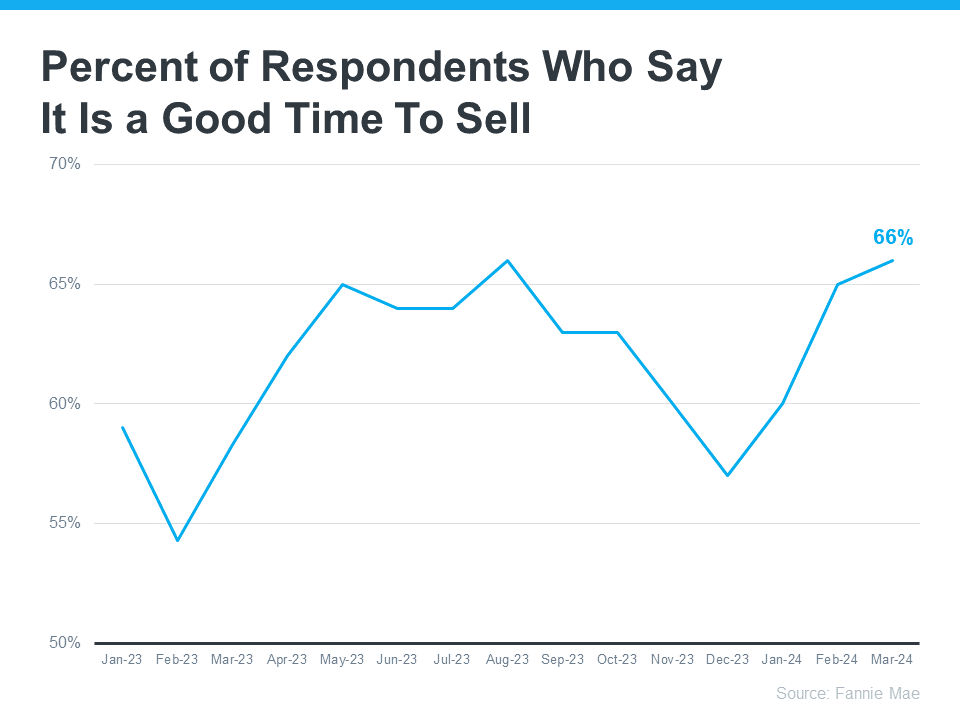
Here’s something else to consider. According to the latest Home Purchase Sentiment Index (HPSI) from Fannie Mae, the percent of respondents who say it’s a good time to sell is on the rise (see graph below):
Why Are Sellers Feeling so Optimistic?
One reason why is because right now is traditionally the best time of year to sell a house. A recent article from Bankrate says:
“Late spring and early summer are generally considered the best times to sell a house. . . . While today’s rates are relatively high, low inventory is still keeping sellers in the driver’s seat in most markets.”
These are the seasons when most people move. That means buyer demand grows. And because there still aren’t enough homes for sale to meet that demand, sellers see some serious perks. According to Rocket Mortgage:
“Homes that are listed at the end of spring and the beginning of summer typically sell faster at a higher sales price.”
What Does This Mean for You?
More sellers are coming to realize conditions are ripe for a move. And that’s one reason why we’re seeing more homeowners put their homes up for sale. If you think you might want to get in on the action, it’s a good idea to start preparing.
A local real estate agent can help you get your house ready by offering advice on how best to fix it up and make it appealing to buyers in your area.
If you list during the spring and early summer, you might sell your house quickly and for a higher price. When you’re ready to make the most of today’s seller’s market, get in touch with a local real estate agent.
This post was first published on Keeping Current Matters.
Oh, by the way®… if you know of someone who would appreciate the level of service I provide, please call me with their name and contact information. I’ll be happy to follow up and take great care of them.
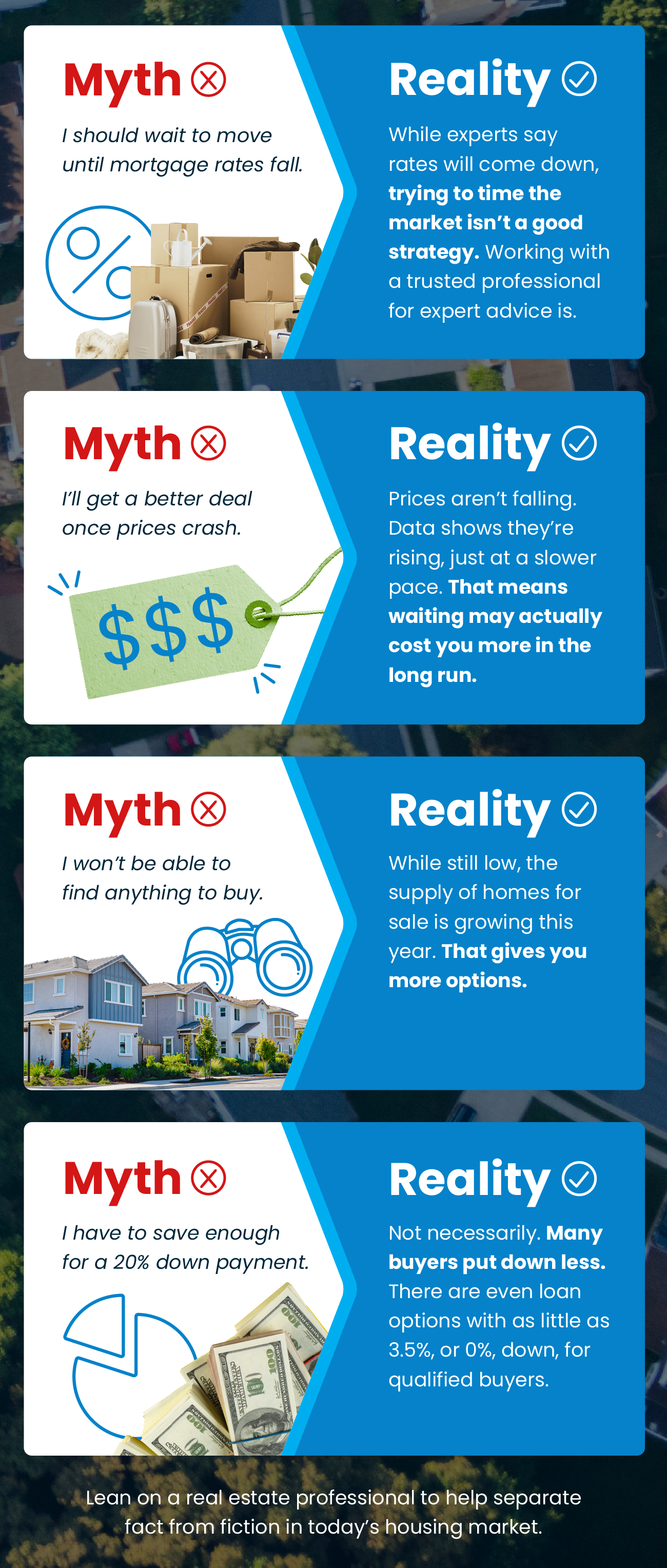
When it comes to the current housing market, there are some myths circling around right now.
Some of the more common ones are that it’s better to wait for mortgage rates to fall or prices to crash. But there are others about the supply of homes for sale and down payments.
Lean on a real estate professional to help separate fact from fiction in today’s housing market.
This post was first published on Keeping Current Matters.

 Facebook
 X
X
 Pinterest
 Copy Link